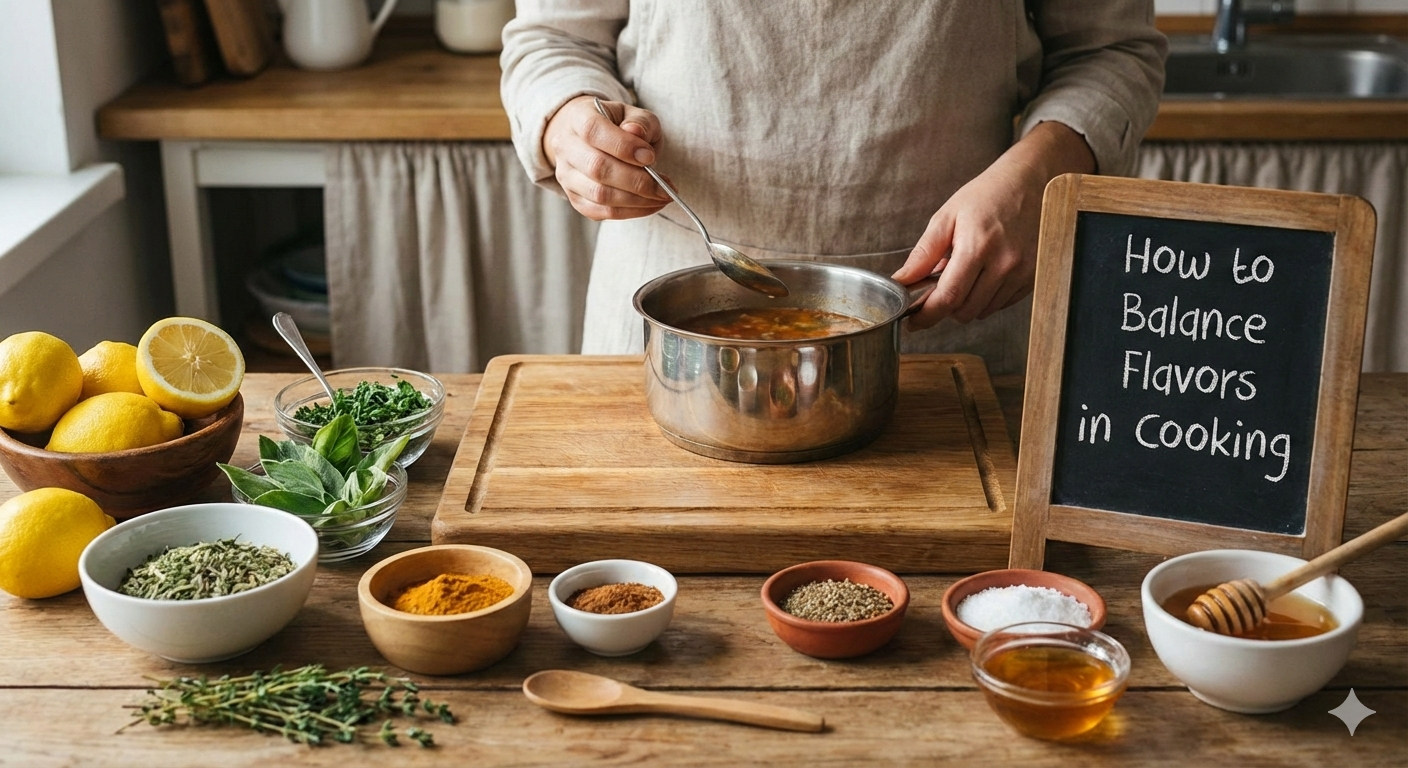
How to Balance Flavors in Cooking: A Simple Guide for Home Cooks
Learn how to balance sweet, salty, sour, bitter, and umami in your dishes. Practical tips for tasting, adjusting, and creating well-rounded meals.
Why Balancing Flavors Matters
Great cooking isn’t just about following a recipe—it’s about how flavors work together. When sweet, salty, sour, bitter, and umami are in harmony, dishes taste rounded and satisfying. When one note dominates, food can feel flat, too sharp, or heavy. Learning to balance flavors helps you fix dishes on the fly and cook with more confidence.
The Five Basic Tastes
Every dish is a mix of five basic tastes. Understanding each one makes it easier to adjust and improve your cooking.
Sweet
Sweetness comes from sugar, honey, fruit, and some vegetables (like carrots and onions when cooked). It can soften acidity and tone down saltiness. A tiny pinch of sugar in a tomato sauce or a splash of honey in a dressing often makes flavors feel more balanced.
Salty
Salt doesn’t just make food “salty”—it highlights other flavors and can make sweetness and umami pop. Add salt in small steps and taste as you go. Soy sauce, cheese, and capers also add salty depth.
Sour (Acid)
Lemon juice, vinegar, and yogurt add brightness and cut through fat. If a dish tastes heavy or flat, a squeeze of lemon or a dash of vinegar can bring it to life. Acid is one of the most underused tools in home cooking.
Bitter
Bitterness appears in coffee, dark leafy greens, and some spices. In small amounts it adds complexity. Balance bitter ingredients with a touch of fat, sweetness, or salt so they don’t overwhelm the dish.
Umami
Umami is the savory, “moreish” quality in tomatoes, mushrooms, Parmesan, and fermented foods. It adds depth and makes dishes feel satisfying. A little tomato paste, soy sauce, or grated Parmesan can boost umami without changing the character of the dish.
Practical Tips for Balancing Flavors
- Taste as you cook. Adjust in small steps—a pinch of salt, a squeeze of lemon—then taste again.
- Fix at the end. Too acidic? Add a pinch of sugar or a drizzle of olive oil. Too flat? Add salt or acid.
- Use fresh herbs. Herbs add freshness and complexity without overpowering. Add them near the end of cooking.
For more hands-on guidance, explore our recipe collection and our cooking tips for step-by-step ideas you can use every day.