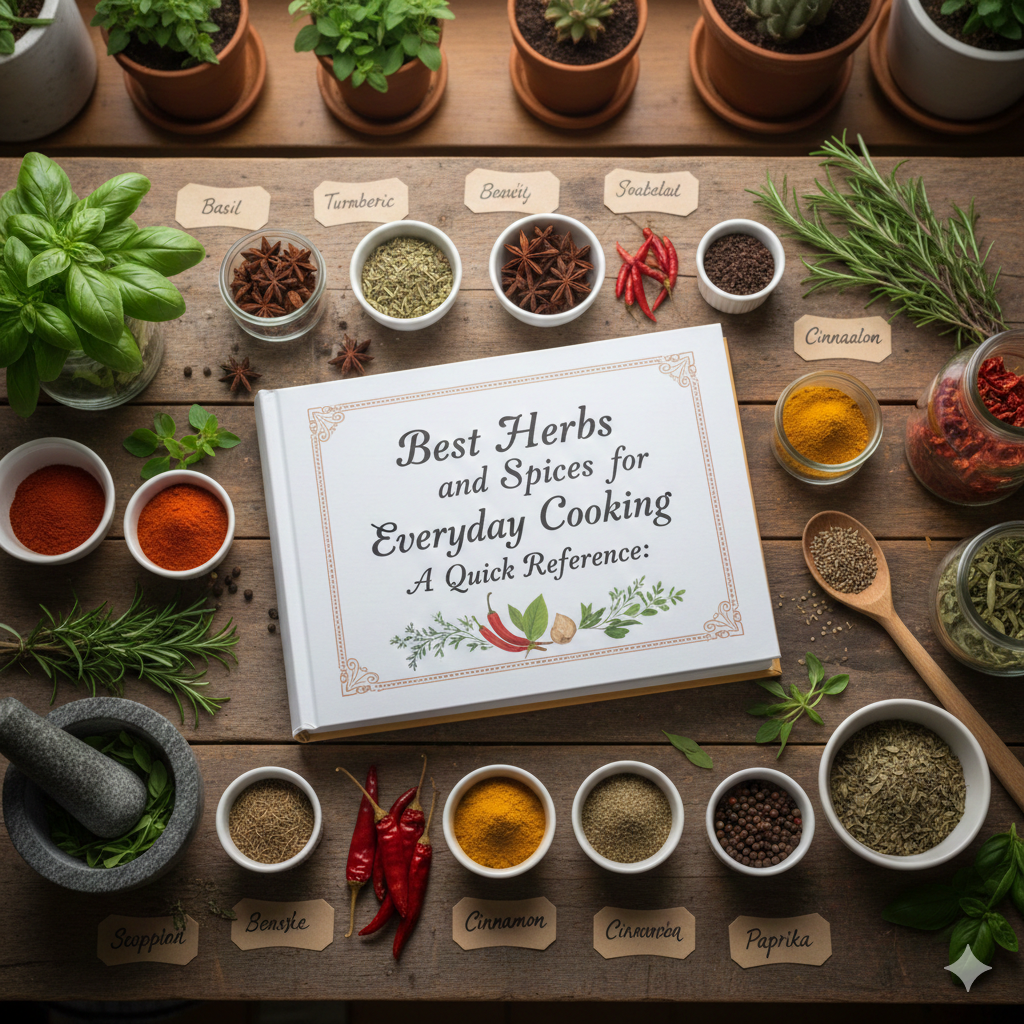
Best Herbs and Spices for Everyday Cooking: A Quick Reference
Which herbs and spices are worth keeping on hand? A practical guide to building a small pantry that adds flavor to soups, salads, and main dishes.
You Don’t Need a Huge Spice Rack
A few well-chosen herbs and spices can transform simple ingredients into meals that taste intentional and varied. This guide focuses on versatile options that work across many cuisines and dishes, so you get a lot of use from a small set.
Herbs: Fresh vs Dried
Fresh herbs add brightness and are best added near the end of cooking or as a garnish. Dried herbs are more concentrated and hold up to longer cooking. When substituting, use about one-third the amount of dried if the recipe calls for fresh (e.g. 1 tsp dried for 1 tbsp fresh).
Essential Fresh Herbs
- Basil: Tomatoes, pasta, salads, and Mediterranean dishes. Pairs well with garlic and olive oil.
- Parsley: Garnish, salads, and sauces. Flat-leaf (Italian) has a stronger flavor than curly.
- Cilantro: Salsas, curries, and Asian-inspired dishes. Use stems and leaves.
- Dill: Fish, yogurt sauces, and potato or cucumber salads.
Essential Dried Herbs and Spices
- Oregano: Pizza, pasta sauces, and Greek-style dishes.
- Thyme: Roasted meats, vegetables, and soups. Very versatile.
- Paprika: Color and mild warmth. Sweet paprika is common; smoked adds depth.
- Cumin: Ground or seeds. Essential in many Mexican, Middle Eastern, and Indian-style dishes.
- Black pepper: Freshly ground adds more flavor than pre-ground. Use in almost everything.
- Cinnamon: Sweet and some savory dishes (e.g. certain stews and rice dishes).
How to Store Herbs and Spices
Keep dried spices in a cool, dark place in airtight containers. They don’t last forever—replace them if they’ve lost smell or color. Fresh herbs last longer in the fridge: trim the stems, put them in a glass of water (like flowers), or wrap in a slightly damp paper towel in a bag.
Experiment Without Overdoing It
Start with a small amount of a new herb or spice, taste, and add more if needed. You can always add; you can’t easily take away. For more ideas on using ingredients well, see our ingredient guides and cooking tips. Our recipes also show how we use herbs and spices in real dishes.